Spine Diagnostic
Bilingual functional back-risk assessment and workplace analytics product
A public bilingual MVP that converts a five-step back-pain and work-context questionnaire into an explainable functional risk profile, personalized recommendations, a spine-age visualization and a downloadable PDF. A separate company pathway supports workforce-impact exploration.
The product, shown without personal or sensitive data
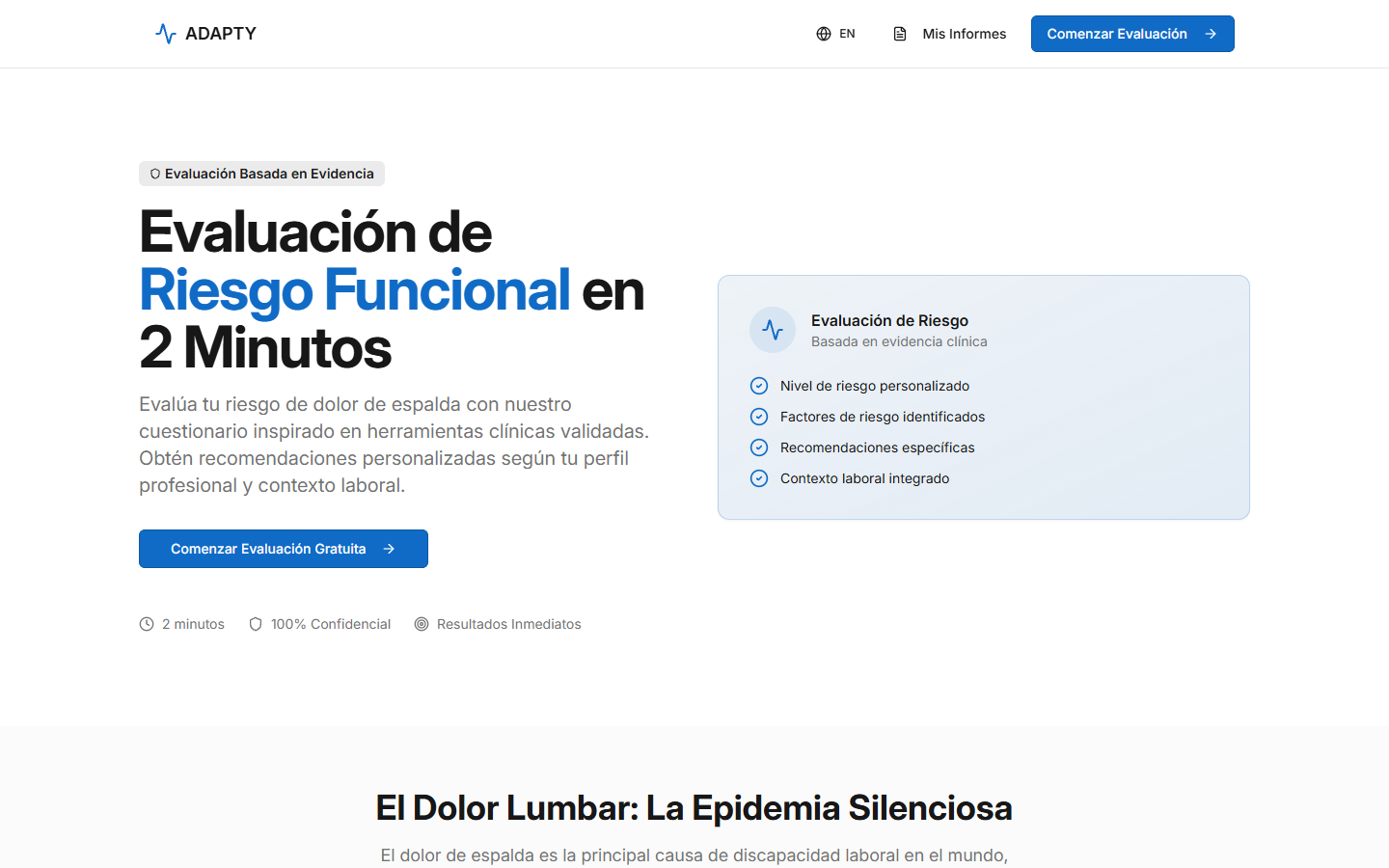
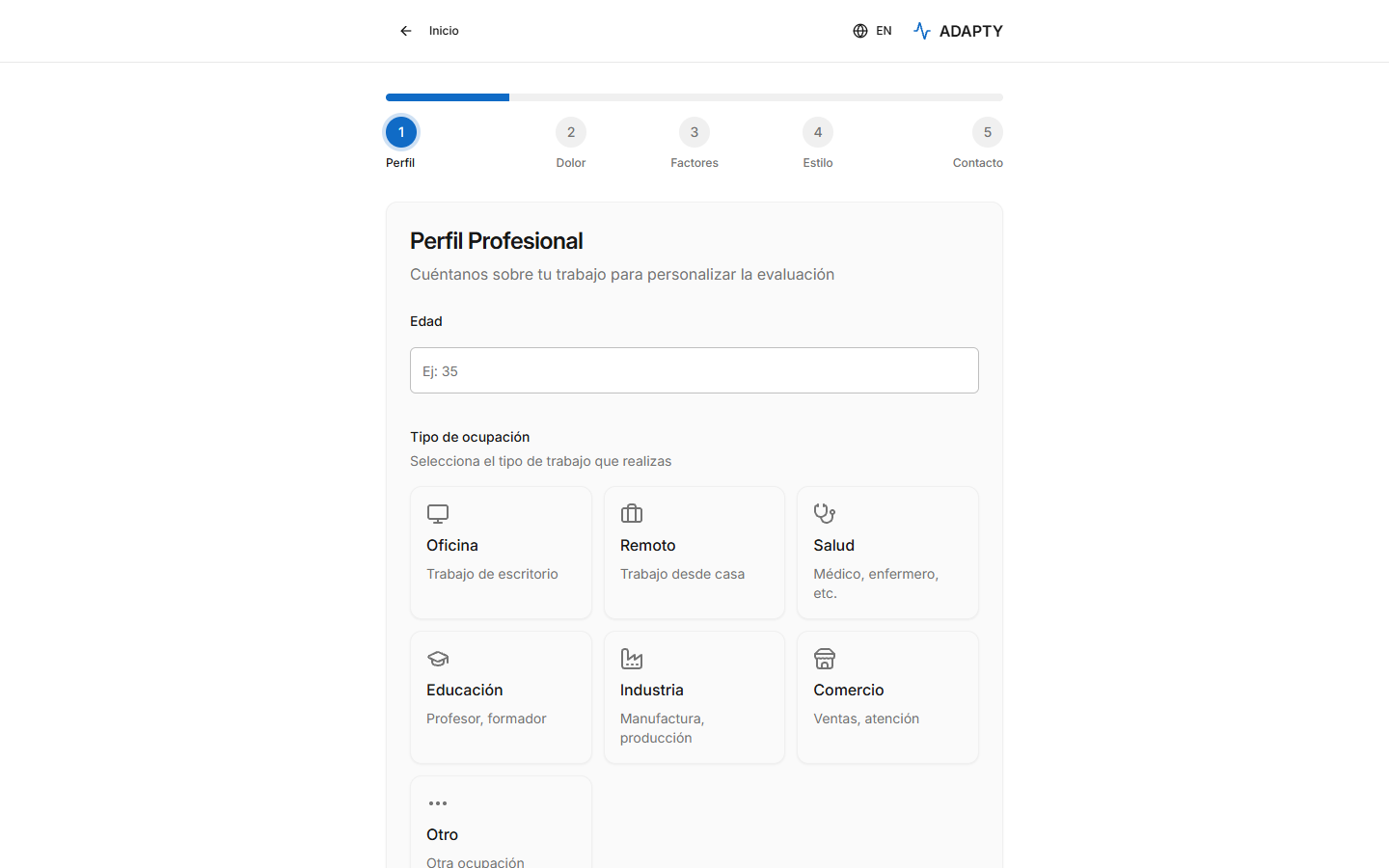
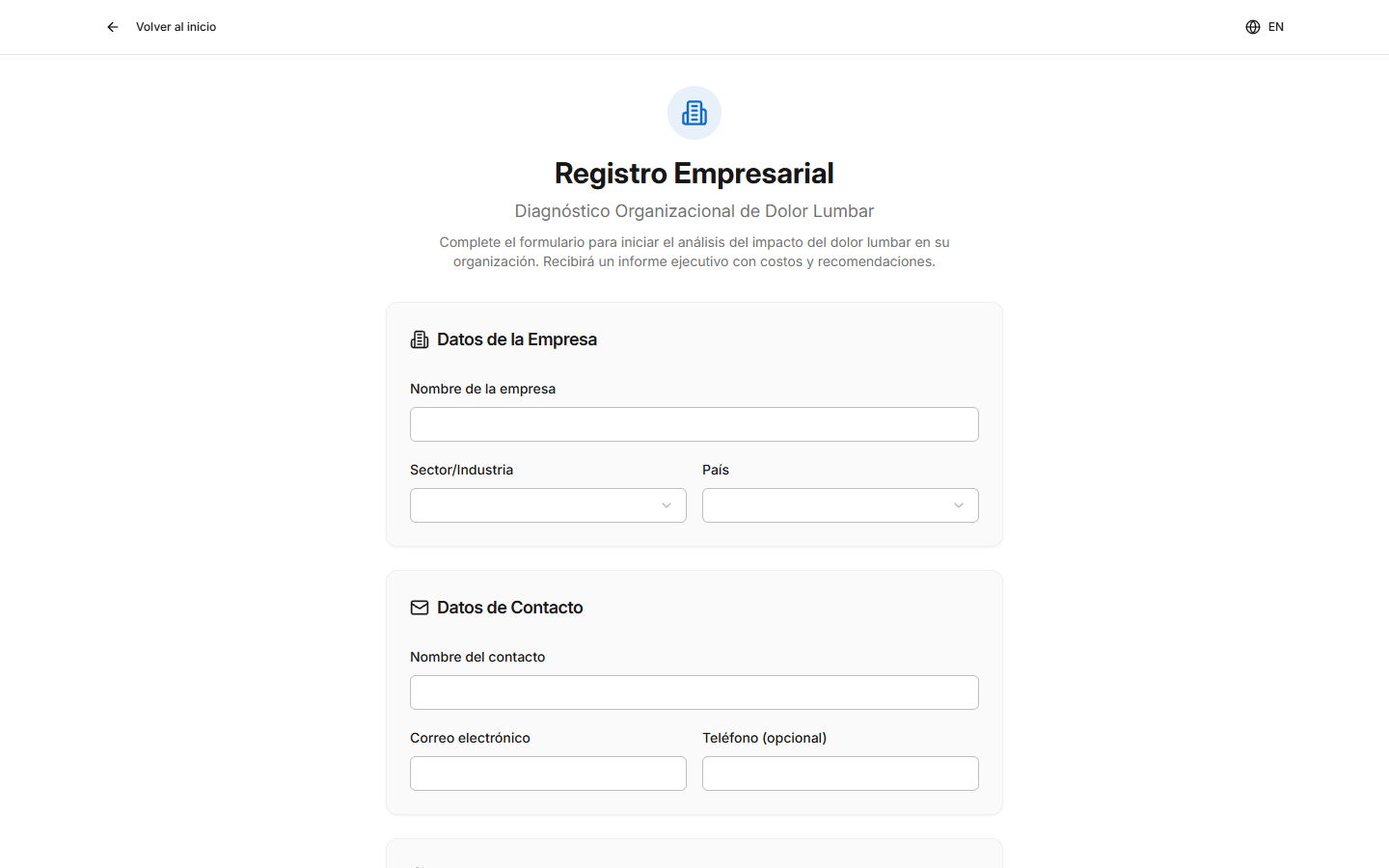
What is implemented today
- Five-step bilingual flow covering profile, pain, risk factors, lifestyle and contact context.
- Explainable outputs across mechanical, recovery and psychosocial risk dimensions.
- Personalized recommendations, spine-age visualization, downloadable PDF and a local report library.
- Company registration and executive dashboard architecture for cost exploration, risk distribution and intervention priorities.
- PostgreSQL persistence, server-computed scoring, protected administration routes and a bilingual interface.
Context
Back-pain information is usually fragmented across symptoms, work exposure, recovery and psychosocial context. Individuals need a clear first orientation, while organizations need a structured way to explore workforce impact.
Problem
Unstructured self-report data is difficult to summarize consistently. A useful product must organize it without turning a risk estimate into a diagnosis or hiding how the result was produced.
My role
Product owner, clinical-domain lead, UX designer and full-stack builder.
What I built
A deployed full-stack web product with a five-step individual assessment, server-computed scoring, segmented results, personalized recommendations, a browser-generated PDF, local report access, company registration, executive dashboard architecture and protected administration routes.
Data or evidence used
The screening foundation is the nine-item STarT Back Screening Tool developed and externally validated by Hill et al. (2008). The Spanish version was culturally adapted by Gusi et al. (2011), and a Colombian study reported internal consistency plus convergent, discriminant and criterion validity (Alfonso-Mora et al., 2023). The product adds work context, segmented outputs, spine age and company analytics that require separate evaluation.
Limitations
Published validation of the underlying instrument does not automatically validate this complete digital implementation or its extensions. The spine-age output is an educational visualization generated by an internal rule, not a biological measure. Company cost outputs are exploratory estimates, not audited actuarial forecasts.
Next validation step
Verify digital scoring equivalence, document attribution and licensing permissions, evaluate the added outputs, test usability, audit privacy and security, and run prospective validation before broader clinical or organizational decision use.
Guide articles and validation studies
- Hill et al. (2008). A primary care back pain screening tool: identifying patient subgroups for initial treatment. ↗
Development and external validation of the original nine-item screening tool.
- Gusi et al. (2011). The Spanish version of the STarT Back Screening Tool in different subgroups. ↗
Translation and cultural adaptation of the instrument into Spanish.
- Alfonso-Mora et al. (2023). Internal consistency and criterion, convergent, and discriminant validity of the STarT Back Screening Tool in a Colombian sample. ↗
Validation study in 68 Colombian adults with low-back pain.
- Hill et al. (2011). Comparison of stratified primary care management for low back pain with current best practice. ↗
Randomized controlled trial of stratified care using the STarT Back approach.