PhysioFlow
Six-agent research workflow designed to assist clinical literature searches, study organization, screening and evidence synthesis. Current outputs, including screening decisions, meta-analysis and GRADE-related assessments, require expert human review and further validation before research or clinical use.
The product, shown without personal or sensitive data
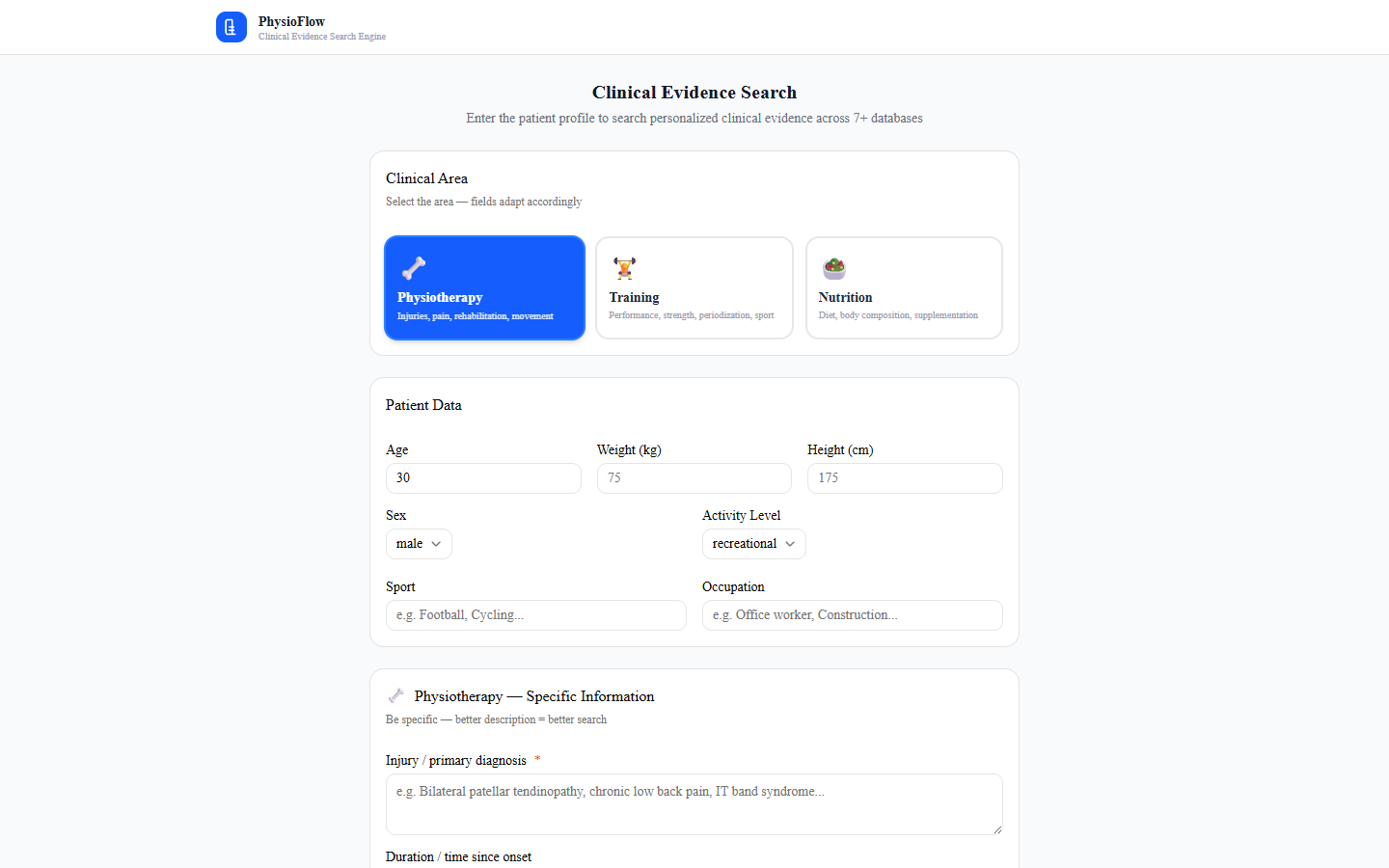
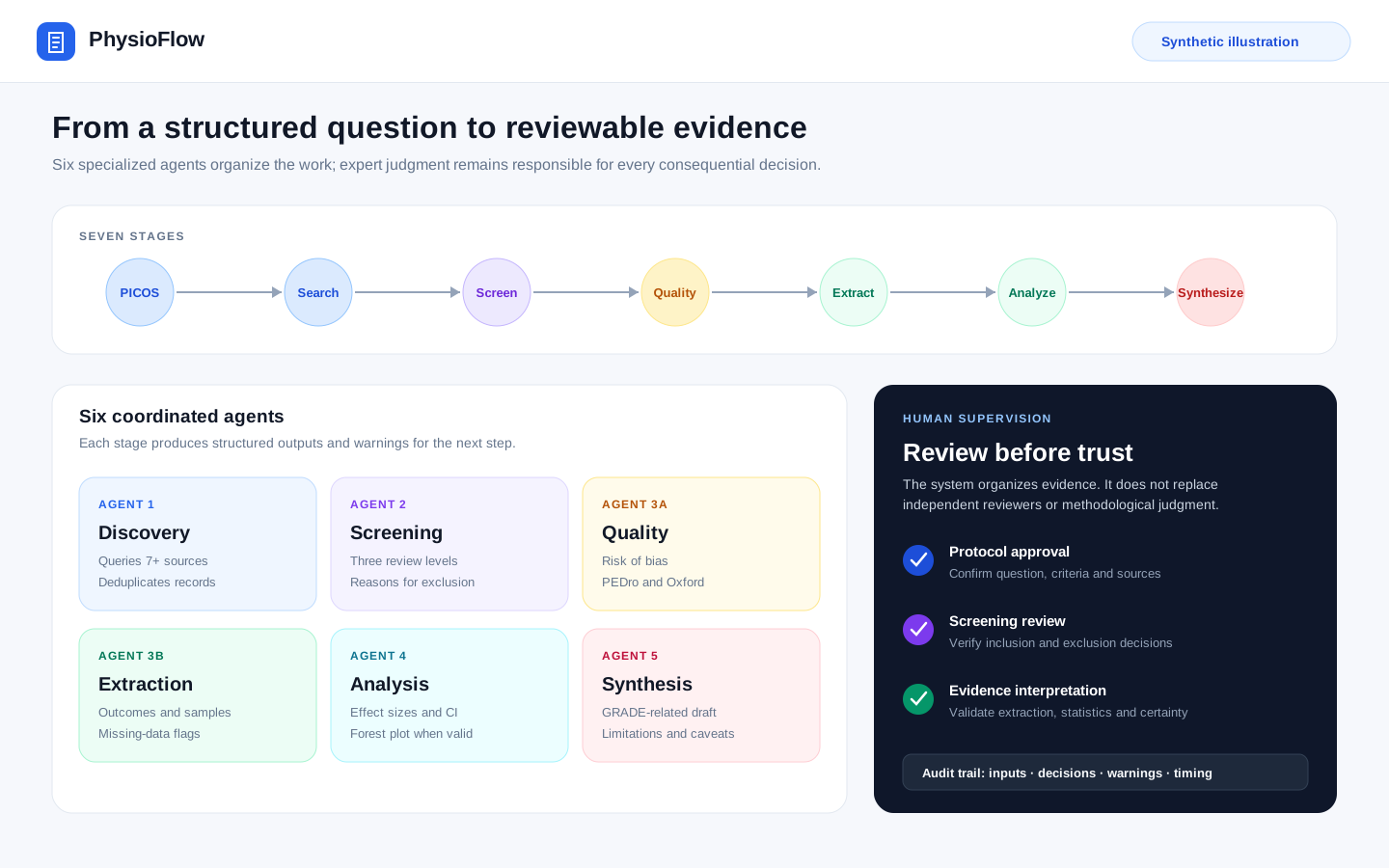
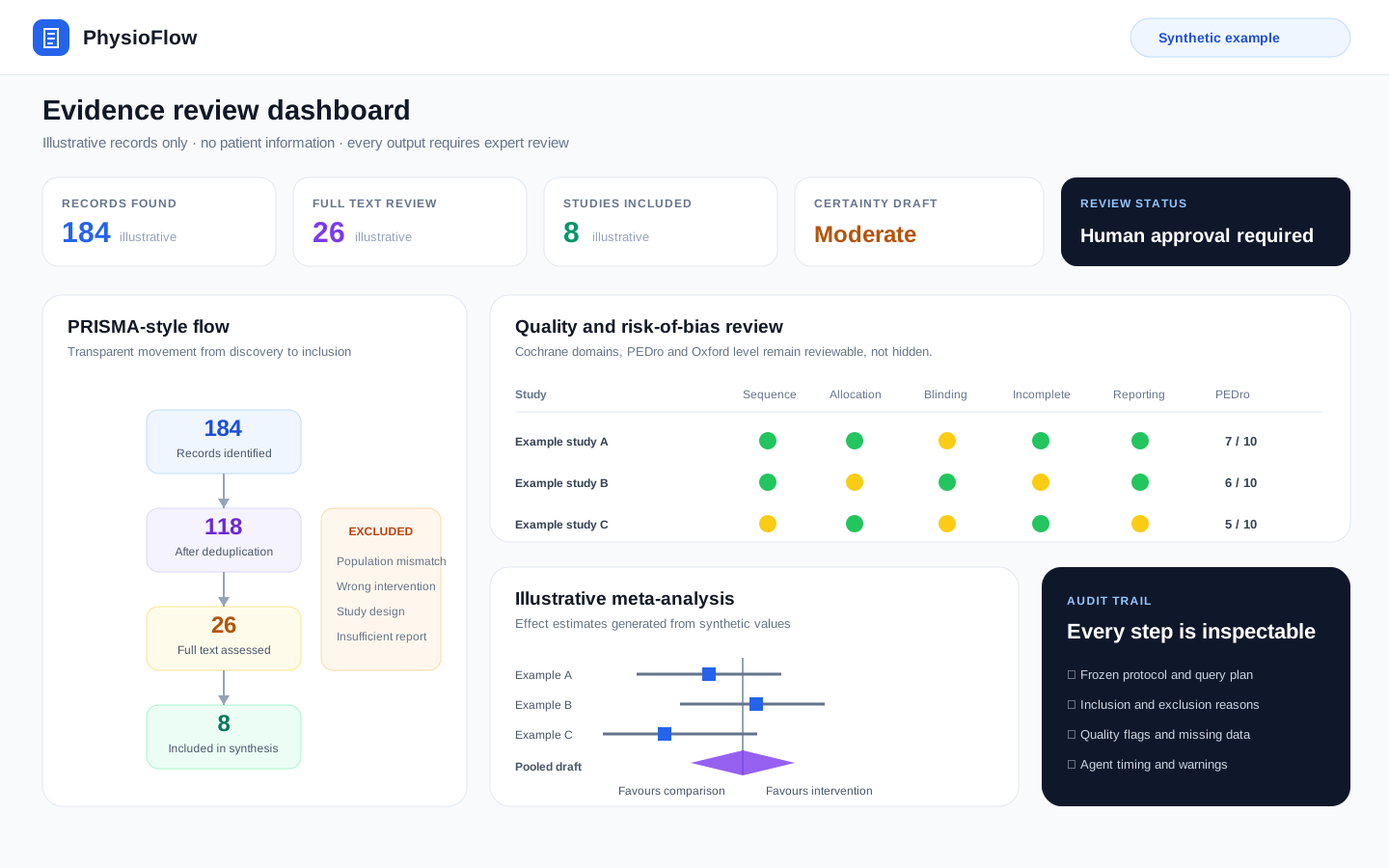
What is implemented today
- Adaptive intake that structures questions from physiotherapy, training or nutrition into a researchable clinical question.
- PICOS protocol, query planning, search across more than seven sources and duplicate control.
- Staged PRISMA-style screening with traceable inclusion and exclusion reasons.
- Quality and risk-of-bias assessment using Cochrane, PEDro and Oxford frameworks when applicable.
- Structured extraction, effect-size calculations, heterogeneity analysis and forest plots when the evidence permits.
- GRADE-related draft synthesis, audit trail and explicit human-review checkpoints.
Context
Clinical evidence work is fragmented across search, study organization, screening, extraction and synthesis.
Problem
Repetitive research tasks consume time, but automating them without expert oversight can amplify selection, extraction and interpretation errors.
My role
Product concept, workflow design and prototype development.
What I built
A six-agent workflow for literature discovery, study organization, staged screening, evidence extraction and draft synthesis.
Data or evidence used
Scientific databases, structured research methods and test cases used during prototype development.
Limitations
It does not replace independent reviewers, methodological judgment or clinical interpretation. Outputs have not been validated for autonomous research or clinical use.
Next validation step
Benchmark each stage against expert-reviewed datasets and document error patterns before expanding autonomy.